We Have Solutions! – Episode 34: From Teacher to Inventor – The BrailleDoodle Device with Daniel Lubiner
Today we are joined by Daniel Lubiner, a 25-year veteran teacher of students with disabilities, and the inventor of the Braille Doodle device, a low-cost braille-based learning device designed to teach literacy, math, science, and art. Join us as we follow Daniel on his fascinating journey from teacher to inventor. You can learn more about his work at The TouchPad Pro Foundation.
Giving Back: Margot Donates Her CCD Voyager E-Reader to Paul
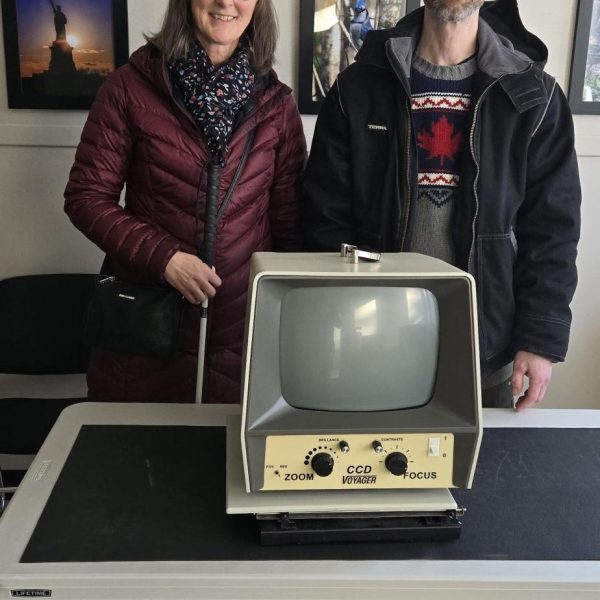
We were delighted recently when Margot, a former Neil Squire participant, generously donated her CCD Voyager e-reader.
Margot no longer used the device due to a significant decline in her vision, but hoping it could find a second life and benefit someone with similar needs, she donated it to Neil Squire.
We Have Solutions! – Episode 33: ATIA Conference and Successful AT Adoption
Today we are joined by AT Specialist Erin LeBlanc. Having recently attended and presented at the Assistive Technology Industry Association conference in Orlando, Erin shares her experiences with us as well as sharing her own expertise on successful AT adoption.
We Have Solutions! – Episode 32: Cephable App Review
In this episode, we are focused on one topic: Cephable. Cephable is an accessible control app designed for individuals with physical disabilities, and it’s completely free for personal use. The app uses a combination of voice control, head motion, facial expressions, and virtual buttons to give you unprecedented control over your PC.
We Have Solutions! – Episode 31: Document Accessibility with Dawn Campbell
On this episode, the AT Help Desk team are joined by accessibility expert Dawn Campbell, who works as a business development manager for Accessibil-IT. We’re going to get into web and digital document accessibility, exploring what document accessibility is, its history, why document accessibility is important, and where you can get help.
We Have Solutions! – Episode 30: Anki Flashcards, MyStudyLife, Palma 2 E-Reader, and More
Today we review some apps for students including Anki Flashcards and MyStudyLife. Then we review some exciting new AT hardware including the Palma 2 e-reader, and more.
We Have Solutions! – Episode 29: News and App Roundup
Today is a short, news and app round-up episode. We look at some recent assistive technology news, new apps for learning math, a low-cost text-to-speech alternative, and a whole lot of scholarship opportunities across New Brunswick and Canada.
New Funding Opportunity for Fredericton Youth: Neil Squire AT Fund
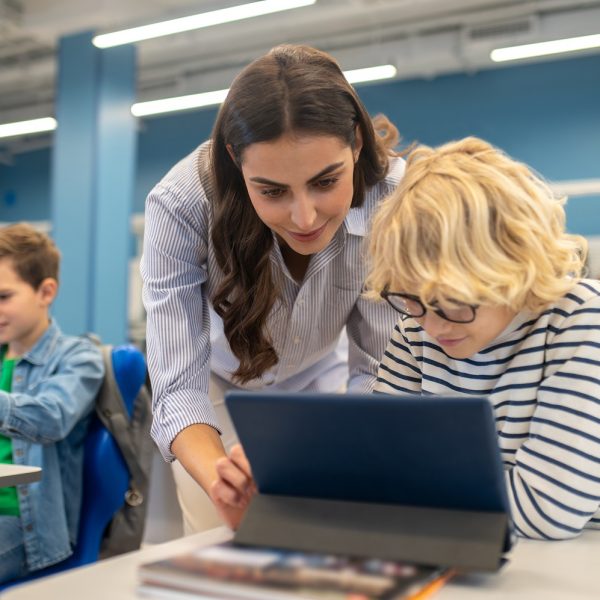
Neil Squire has created a new funding opportunity for persons with disabilities in the Fredericton area.
The Neil Squire AT Fund was created to help support youth from grades one through twelve in acquiring new or refurbished assistive technology. Students from all types of school environments are encouraged to apply. This includes public, private, and home schools.
This fund will support households with a $75,000 or less annual household income and will be limited to a maximum of $1,000 in funding for each household.
We Have Solutions! – Episode 28: Back to School 2024
School is starting once again, and on today’s episode we’re going to explore some brand-new apps, strategies, and technologies that we think would be especially useful to students in particular.
We Have Solutions! – Episode 27: New Tech From MIT, Successes and Failures in AI, and an Accessible Controller Review
On today’s episode we dive into some exciting new technology from MIT, look at some past failures and successes in the world of AI, and we review what might just be the most accessible gaming controller ever made.

 |
| 400 – 3999 Henning Drive |
| Burnaby, BC V5C 6P9 |
| 604 473 9360 | 1 877 673 4636 |
| solutions@neilsquire.ca |
| Refer today |
|
|
 |
| 400 – 3999 Henning Drive |
| Burnaby, BC V5C 6P9 |
| 778 945 1215 |
| hearingsolutions@neilsquire.ca |
| Refer today |
|
|