
Ten Years of AT Help Desk by the Numbers
This year, our AT Help Desk program celebrates 10 years of service in New Brunswick. Here’s a breakdown of the impact:

This year, our AT Help Desk program celebrates 10 years of service in New Brunswick. Here’s a breakdown of the impact:
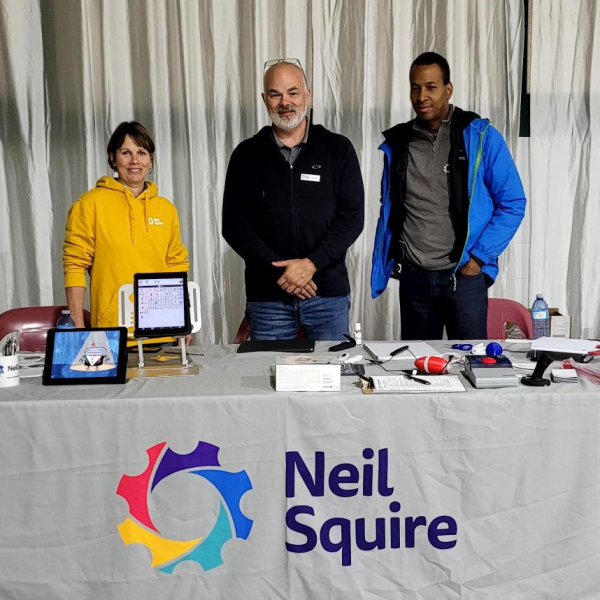
Imagine that you have a technical problem or a computer question at work, you might call your company’s IT help desk. But what if you have a disability and you have a question about assistive technology? Maybe you need to find a device that will help you with your needs, or maybe your assistive technology isn’t working right and you need help. That’s where Neil Squire’s AT Help Desk comes in.
In 2024, the AT Help Desk celebrates 10 years of serving New Brunswickers with disabilities. Whether you’re working, studying, simply need an assistive technology that makes your life a little easier, or are calling on behalf of a client, student, or family member, anyone can reach out. And all services are available in English and French.
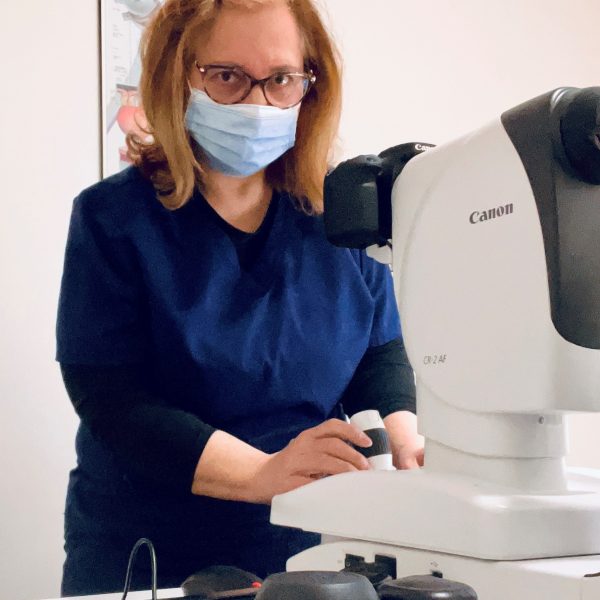
Tracy works as a diagnostic technician at an eye clinic in Salmon Arm. Every day in a fast-paced busy clinic, her job includes performing retinal scans, fundus photography, medical billing, and assisting patients with their ophthalmic concerns.
She has hearing loss, as well as pain in her feet from pes planus (flat feet) and a hallux rigidus (stiff big toe).
“[It] was impacting my everyday work life,” she shares. “I was experiencing foot pain while on my feet all day, also I was facing challenges of hearing patients correctly in such a busy working environment.”

Louise works part-time as a manager of an employment services provider, leading a team of 10 staff in in delivering services that support people in becoming employment ready and finding sustainable employment.
“Over the past few years, I have experienced loss of hearing to the point where it was impacting my ability to carry out my job effectively,” she says.

Candace works as a recruiter for a regional health authority. Her job involves finding potential applicants online and at in-person events, as well as interviewing applicants.
“I love my job and plan to do it for as long as I can,” she says.
“I am bilaterally hearing impaired. This is a genetic condition that worsens over time and my hearing needs change. If I was not able to hear, I could not do any of my current tasks and would have to give up a job that I love. Not being able to have a meaningful conversation with everyone that I am in touch with would be detrimental to my work.”

Rommel works in shipping and receiving for a hotel. He has hearing loss, which has made his job quite difficult.
“I could barely hear anything, and I couldn’t even lip read anymore due to people wearing masks. It was very challenging. I had to ask someone to intervene most times,” he shares.

Caron is self-employed as a counsellor in Victoria, and her job requires her to listen closely to her clients.
“I have lost some of my hearing over the last few years,” she says. “I found that I was missing things that clients said to me. I was embarrassed to keep asking people to repeat themselves. I want to be the best counsellor I can be!”
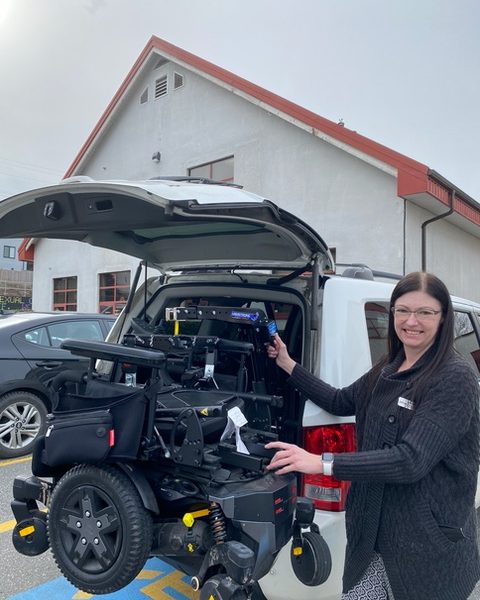
Trina works with seniors for a community service organization, helping them connect with community supports and services, as well as providing practical supports to older adults and their families.
She has Mixed-Connective Tissue Disease, which has many of the features and symptoms of lupus, arthritis, and various other conditions.
“This limits my ability to sit on non-supportive chairs and at non-ergonomic workstations; walk or stand for long periods; and write legibly and type quickly. Therefore, it necessitates the use of adaptive equipment for many workplace tasks,” she says.

Karen works as an intake coordinator for a residential drug and alcohol treatment centre.
“I have hearing loss and was having a hard time hearing on the telephone and in busy environments with background noise,” she shares.
A friend suggested she check out WorkBC Assistive Technology Services for help funding a new pair of hearing aids. WorkBC Assistive Technology Services staff walked her through the application process, and in no time, she was approved.

Belle works in healthcare. She has hearing loss in both ears, which can make her job difficult.
“I have a lot of interaction with co-workers, visitors and residents, and the surroundings are kind of loud,” she says. “I barely hear what people are telling me, I always asked them to repeat what they said, or sometimes pretend that I heard them.”

 |
| 400 – 3999 Henning Drive |
| Burnaby, BC V5C 6P9 |
| 604 473 9360 | 1 877 673 4636 |
| solutions@neilsquire.ca |
| Refer today |
|
|
 |
| 400 – 3999 Henning Drive |
| Burnaby, BC V5C 6P9 |
| 778 945 1215 |
| hearingsolutions@neilsquire.ca |
| Visit our Hearing Solutions website |
|
|