
G-Suite Accessibility Features: Part 2

Last week we looked at some of the accessibility features that are supported within the G-suite, Google’s free, online, suite of productivity apps. In last week’s e-bulletin we looked briefly at Gmail, Google Calendar, Google Docs, and Google Drive. This week we will continue to explore the G-suite, and we’ll look at Google Sheets, Slides, Drawings Forms, Sites, Hangouts, and Classroom.
G-Suite Accessibility Features: Part 1
Today we’re going look at the wide variety of accessibility features that are available for Google’s G-Suite. The G-suite is a free, online collection of productivity apps that gives users access to E-mail, video conferencing, spreadsheets, and much more. These free apps are absolutely packed with built-in accessibility features that are constantly being modified and refined, making them a great choice for AT users who want a no-cost and highly accessible solution to everyday online tasks.
Technology@Work on AMI This Week

Grant Hardy from Accessible Media Inc. checks out our Technology@Work program and meets two recipients whose lives have been changed for the better by. Watch the video here:
Back to School Apps for 2018

The summer has passed, and September is here! Now that school is back in session, we thought we’d create a list of noteworthy “Back to School” apps for 2018. The apps have either been newly created in 2018, have just come to our attention, or have simply never been reviewed by us…after all, with so many apps on the market, it’s easy to miss a couple! And while these apps are diverse in their functions, and cover a wide range of categories, they are united by their potential in the classroom, as well as their ability to serve students, teachers, and even parents!
David Can Commute Reliably with Technology@Work
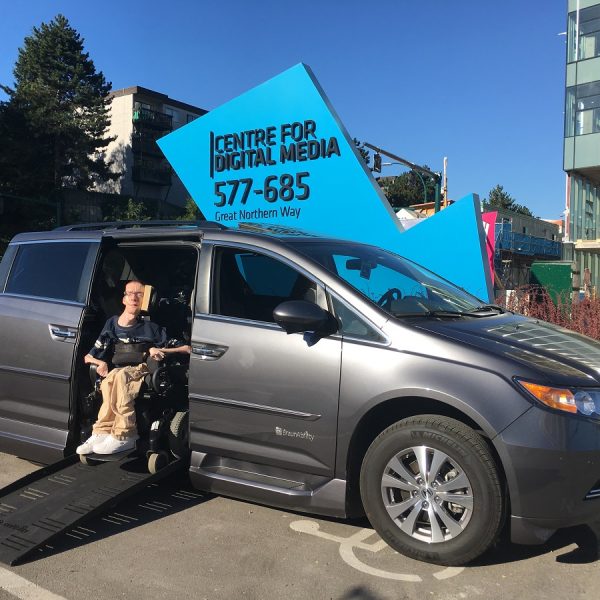
Spinal muscular atrophy is a progressive condition that weakens a person’s muscles. When David was diagnosed with it, his doctors believed he wouldn’t live past the age of two.
“I’ve always been an overachiever. As you can see, not only have I lived past the age of 2 but I have thrived,” says David on his website.
How-to: Use Siri as a Hands-Free Calculator

Right now on the iOS app store there are countless talking calculators available for purchase and even some for free. We’ve looked at Talking Calculator in the past, and it does a great job of calculating complex formulas hands-free with full VoiceOver support. For users who are blind, have low-vision, or have learning disabilities that make it difficult to visually process numbers, talking calculators can help level the playing field by giving users the ability to engage in math problems independently.
CAOT Conference Workshop

The Canadian Association of Occupational Therapists (CAOT) is hosting its annual conference in Vancouver this year, from June 20th to 23rd. Makers Making Change‘s Zee Kesler will be hosting a pre-conference workshop introducing maker skills to occupational therapists.
KNFB Reader
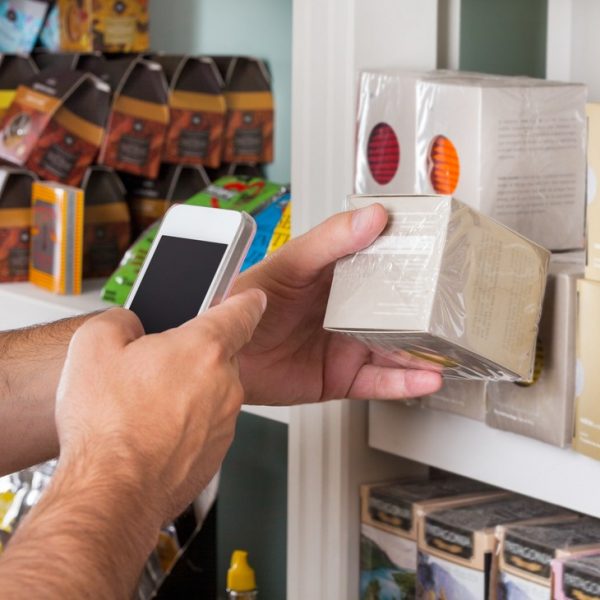
There’s an app on the market right now that’s changing how blind, low-vision, dyslexic, and other print-disabled users are able to interact with text. KNFB Reader uses Optical Character Recognition (OCR) technology to instantly capture and convert virtually any type of text into audio or Braille which can then be played back, shared, or printed from a Braille embosser.
Beeline Reader: Reading Made Easier

Most of us have experienced eye strain and discomfort as a result of reading text on a computer screen. Now, imagine how much that discomfort would be magnified for an AT user who struggles with reading comprehension or vision. Students, professionals, AT users, and casual technology users have all experienced symptoms associated with prolonged exposure to a screen, and who knows what kind of consequences there will be for a generation of technology users who are constantly straining their eyes?
An “Extremely Liberating Experience” for Marco

For the past six years, Marco has been running his own business as a motivational speaker. Last year, he began a contract as an Accessibility and Inclusion Consultant with the Presidents Group, a network of business leaders focused on increasing employment for persons with disabilities across British Columbia.

 |
| 400 – 3999 Henning Drive |
| Burnaby, BC V5C 6P9 |
| 604 473 9360 | 1 877 673 4636 |
| solutions@neilsquire.ca |
| Refer today |
|
|
 |
| 400 – 3999 Henning Drive |
| Burnaby, BC V5C 6P9 |
| 778 945 1215 |
| hearingsolutions@neilsquire.ca |
| Refer today |
|
|